Chinese Ginger Milk Curd
- Serves: 2
- Time: 20 min
- Date added: 2026-02-18
Description
Ginger milk curd—a custardy, spoonable treat that sits texturally between pudding and soft tofu—became an instant favorite. In traditional Chinese medicine, ginger is believed to improve circulation and ease digestion, while its warming properties help balance the cooling nature of milk when the two are served together. I liked how the mildly spiced dessert coated my throat in gentle warmth, especially when it was chilly or I was under the weather.
Get the Temperature of the Milk Right
The milk's temperature is critical to the success of the curd, as only a narrow range will trigger the enzymatic reaction. Since the milk’s temperature drops slightly once it leaves the heated pot, you should bring the dairy to a temperature of 170 to 175°F (77 to 79°C), stirring occasionally to prevent hot or cold spots. In that range, the milk will be warm and steaming—hot enough to activate the zingibain enzyme but not so hot that it destroys it. The best time to stir in the sugar is after the milk has warmed but before removing the pot from the heat, when it will dissolve easily. I prefer a milder sweetness level here, but those who like a sweeter flavor can add up to five teaspoons for two servings.
How You Pour Matters
The final critical step is the pour. When adding the milk to the ginger juice, be sure to stream it in from a height of six to eight inches in one continuous motion. This isn’t for show: Pouring this way gently agitates the milk, evenly dispersing the enzyme throughout the liquid without needing to stir. A fragile protein network begins forming within seconds, and stirring at this point could interrupt that process. The gentle agitation also helps equalize the mixture's temperature, minimizing the risk of hot or cold pockets that could prevent the curd from setting. Simply position the pot of milk six to eight inches above the ramekin holding the ginger juice, and pour with confidence. Then loosely cover the bowl, step away, and let chemistry do its thing.
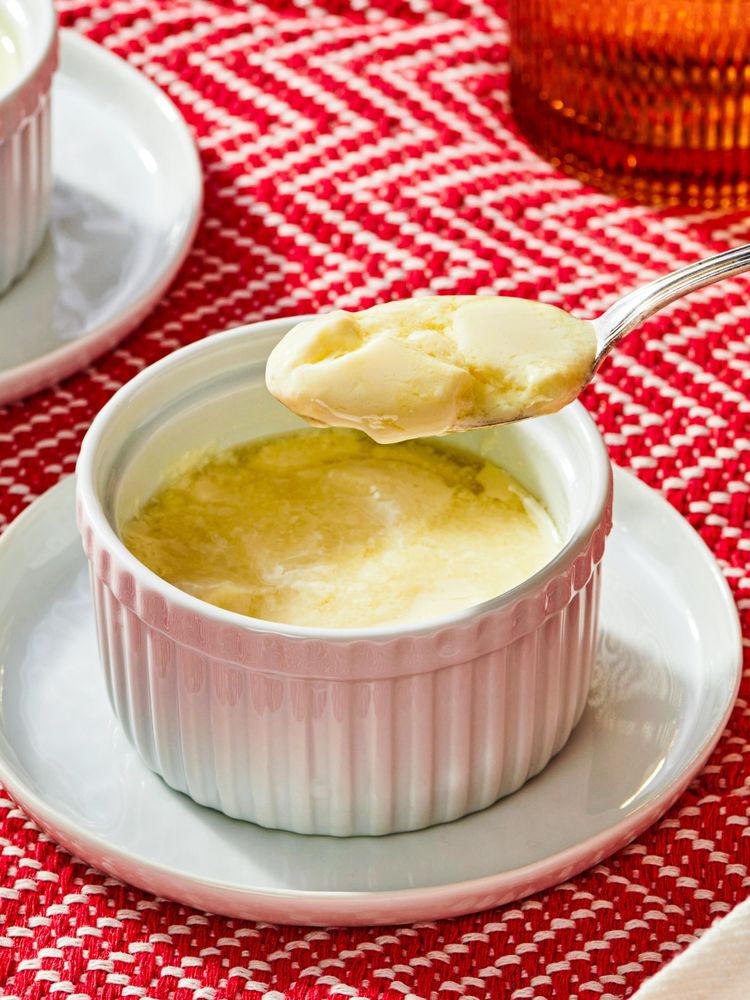
After 15 minutes, the surface of the curd should appear glossy, like porcelain, and it should wobble as a single, cohesive mass when the bowl is gently shaken. Here’s a test many Cantonese cooks use: Lay a spoon on the surface of the curd, and it should rest without breaking through.
If your curd is clumpy or doesn’t fully set, a few things may have gone awry. The ginger may have been too old, the milk too hot or not hot enough, the ramekins too cold—or maybe you couldn’t resist giving the mixture a stir (I’ve been there). The good news is that even an improperly set ginger milk curd is pretty tasty, so by no means would I call it a failure.
I love eating the ginger milk curd right after making it, when it's still warm and especially aromatic. You can also cover and refrigerate it until chilled—about one to two hours—which firms up the texture and makes for a refreshing treat.
Why It Works
- Using freshly grated ginger from a mature, plump root—rather than from a very young or older, shriveled one—ensures a substantial amount of zingibain, the enzyme that helps set the milk curd.
- Heating the milk to 170 to 175°F (77 to 79°C) guarantees it's at the optimal temperature when mixed with the ginger juice, triggering the chemical reaction that sets the milk into a curd.
- Warming the ramekin with hot water and drying it just before use minimizes the temperature drop that occurs when the heated milk is poured in, further ensuring that the chemical reaction occurs.
Ingredients
- 1 (5-inch) piece fresh ginger (about 2.75 ounces; 80 g), peeled and finely grated on a rasp grater, such as a Microplane
- 1.5 cups (355 ml) whole milk
- 1 tablespoon granulated sugar (.5 ounce; 15 g), plus more as needed
Directions
- Place grated ginger in a cheesecloth and squeeze juice into a small bowl. Fill two 6-ounce ceramic ramekins briefly with hot tap water to warm them up; let sit while you heat the milk.
- In a small saucepan, heat milk over medium-low heat, stirring occasionally, until it gently steams and temperature reaches 170 to 175°F (77 to 79°C) on an instant-read thermometer.
- When milk is almost at temperature, empty ramekins and dry thoroughly with a kitchen towel. Place 1 tablespoon ginger juice in each ramekin. (Save any excess for another use, such as to add to juices and smoothies.)
- Whisk sugar into milk until fully dissolved, then remove from heat.
- From a height of 6 to 8 inches, immediately divide warm milk between ramekins, pouring in a continuous stream directly over ginger juice. Do not stir; milk should register 158 to 167°F (70 to 75°C). Loosely cover ramekins with kitchen towels and let stand, undisturbed, at room temperature until curd is fully set and wobbles, and surface is glossy, about 15 minutes. Serve immediately or refrigerate until chilled, 1 to 2 hours.
Notes
- Don't use a food processor to break down the ginger, as this won’t break down the fibers as effectively and will leave a lot of juice trapped in the pulp.
- Plant-based milks won’t work in this recipe, as the chemical reaction relies on the casein found in animal milk.
- If you prefer a thicker curd, you can dissolve 2 teaspoons of whole milk powder in the cold milk before heating it.
- Ginger milk curd will keep its texture when stored covered in the fridge for up to 6 hours. Longer than that, the texture will loosen, and the liquid may start to separate, but you can still enjoy it for up to 24 hours.
Source
Comments
- 2026-02-18: didn't set super firm, but was delicious